The presentation of the Prometheus Plan in Le Grand Continent on 8 July 2026 did not set out its precise financing arrangements. It simply stated the need to raise several hundred billion euros of private capital over three years, drawing on both domestic savings and international capital. Here we explain how that financing would be structured: as we shall see, implementing Prometheus is entirely realistic.
Executive summary
The proposed structure can be summarised in ten points: what needs financing, how to finance it, what it costs the state, what it yields if it succeeds and what it costs if it fails.
(1) Prometheus requires €620 billion to be mobilised over three years: €130 billion in public funding and €490 billion in private capital. The €620 billion covers the cost of the sprint itself (around €520 billion), advance funding for post-sprint deliveries to partner states (€72 billion) and reserves. The state contributes 1.5% of GDP a year for three years (€130 billion); domestic savings provide €120 billion and international capital €370 billion.
(2) Two things must be financed: a frontier lab and 12 GW of compute capacity delivered by the end of 2029. The lab raises equity in three rounds (€20 billion, €42 billion and €72 billion), with no financial debt during the sprint. The state holds 25%, then 18%, together with a special share carrying specifically enumerated veto rights. Compute is divided into a 4 GW public tranche and an 8 GW market tranche, financed and operated differently.
(3) The public tranche is owned by Calcul de France, a company incorporated under ordinary company law and designed to qualify as a corporation for Eurostat purposes. The state holds 65%, alongside private shareholders holding 35% on equal terms: a PEA-eligible ELTIF fund and an institutional co-investor. Its €100 billion of private financing (€85 billion of debt and €15 billion of equity) is raised without a state guarantee, through savings funds for long-lived assets, investment-grade senior debt, export-credit-agency-backed tranches and mezzanine debt. It leases compute to the lab at market rates, with payments deferred during the sprint and treated as interest-bearing, capped and convertible supplier credit.
(4) The market tranche is financed on market terms because it has a committed buyer: a treaty-based Agency established by France and its partners. The Agency signs twelve-year purchase commitments (7+5) with infrastructure companies, making this tranche bankable for international capital, and subleases the compute to the lab. As an international organisation with its own governing bodies, capital and risk-bearing balance sheet, in which France remains below 50%, it is not consolidated into French public debt. Its model is the European Stability Mechanism (ESM) and Intelsat, not the European Financial Stability Facility (EFSF).
(5) Partners pay 0.3% of their GDP a year for three years for a wager that is virtually cost-free. Their contribution gives them proportionate compute rights, converted into enhanced frontier-inference entitlements if the project succeeds, or into capacity that can be leased out if it fails. Our pivot simulations return 95–113% of their initial contribution. A fair return in capacity, through a business access channel compliant with EU law, addresses free-riding; their exposure is capped at 1.2% of GDP.
(6) The two-tranche structure captures a four-percentage-point cost-of-capital advantage on one-third of the compute. The market tranche costs around 9%; the public tranche around 5.3% on an all-in basis, because the asset lends itself to this financing and because the state's equity absorbs the first loss. This saves around €1.3 billion a year per public gigawatt, without any rent departing from market rates.
(7) The impact on public finances is only 0.5 percentage points of GDP in additional annual deficit and around 4 percentage points of debt, strictly confined to the three-year sprint. Nearly two-thirds of public outlays are financial transactions with no deficit impact. The additional interest bill—around €5.5 billion a year at steady state, assuming a 4.2% French government bond yield—would be covered in a successful outcome by dividends, programme-related tax receipts and the discount earned on prepaid capacity. The state's maximum exposure, including both amounts paid and contingent commitments, is around €160 billion. An ex ante Eurostat opinion on Calcul de France and the Agency would be sought before any issuance.
(8) The structure is designed to involve no notifiable state aid, except potentially the deferred rental payments. The state invests pari passu, lends and leases at market rates, and provides no guarantees. Only a partial €15 billion standby guarantee, priced at a market premium, is authorised for activation without prior Commission approval. The Important Project of Common European Interest (IPCEI) route remains available with European partners should the payment deferral be classified as aid.
(9) If successful, the lab remains at the frontier without new public money. Three revenue thresholds—cash survival, long-term frontier sustainability and full economic self-sufficiency—define the trajectory. Reaching the frontier gives the lab access to the corporate borrowing used by all the leading labs. The 2030–2032 expansions, taking capacity to 18, 24 and 30 GW, are backed by prepaid demand and prepared from 2027, without new public financing or additional callable capital.
(10) If the project fails, losses are capped and the timetable is fixed: around 1% of GDP in almost all failure scenarios, or 2–4% in the highly unlikely event of an AI winter. Five contractual milestones, from T+6 to T+36, assessed by an independent panel, trigger an automatic pivot towards sovereign use or commercial leasing of compute, ruling out any open-ended attempt to keep the lab alive. Even then, France would retain 9 GW on its soil, including 4 GW in full public ownership: a much stronger starting point than the current trajectory for any alternative strategy.
The financing requirement
1.1 What needs to be financed?
In simple terms, the success of the Prometheus Plan requires financing for two distinct things:
- the lab itself, including the rent it must pay for compute;
- the construction and provision of 12 GW of compute for the lab by the end of 2029, and subsequent expansion.
The financing arrangements must meet three constraints:
- sovereignty, safeguarding essential national interests: France bears most of the project's risks and must secure lasting protections over its central strategic asset, the frontier lab;
- the budget, given the state of French public finances;
- economic benefit: ensuring that the French economy benefits directly from a sufficient share of the project, commensurate with the national effort it entails.
The plan also rests on an explicit assumption: that compute prices will hold steady or rise over the next five to ten years. This is a highly likely outcome, given the short-term constraints on lithography capacity, and therefore chip production, and the fact that every improvement in models makes a minute of compute more valuable.
Public and private funding are not interchangeable within the project. Public money is used only where it is strictly necessary to unlock private capital.
1.2 The public contribution
The state's broadly defined contribution amounts to 1.5% of GDP a year for three years, or €130 billion in total, but only an additional 0.5% of GDP a year in the Maastricht deficit measure, as explained below. Funding for all three years would be programmed at the outset in the multi-year provisions of the Prometheus Act, with the project's full commitment appropriations approved in the first Finance Act. As section 6 explains, this amount is the sum of the public financial interventions essential to the project's success and to bringing in markets and international capital, for which the state must act as an anchor investor. The scale of this national investment also justifies the different status of France, which alone would control the central asset, and the other partners, which would benefit from it.
Although substantial, this contribution is strictly limited in time: three essential years of initial support, after which the market can take over once the lab reaches the frontier. It is a genuine, exceptional investment, confined to three years, that would give the state substantial strategic assets as well as potentially considerable economic returns. Financing it through public debt, increasing the current stock by only 4%, would therefore be fully justified.
Beyond this direct contribution, the state would provide no firm guarantee on debt raised for the project. The Finance Act would merely authorise a €15 billion ceiling for a standby guarantee, available if the market failed to absorb the senior debt of the public tranche discussed below. Partial coverage and a market-rate premium would be designed to allow activation without prior Commission approval.
The €620 billion to be mobilised over three years for Prometheus—the roughly €520 billion sprint cost, plus advance funding for post-sprint deliveries to partner states and reserves, as shown in Figure 12—exceeds the value of the assets created, since financing must cover both the construction of compute and the rent paid by the lab to use it. After deducting France's €130 billion public investment, the private capital required over three years would therefore be around €490 billion.1
Private capital is available: how do we attract it?
2.1 International capital
International capital is available to finance large compute projects, as contracts signed by US hyperscalers demonstrate. The September 2025 OpenAI–Oracle contract alone, worth $300 billion for 4.5 GW of compute over five years, is almost half a Prometheus Plan in terms of compute. For a single Louisiana site, Hyperion, Meta and Blue Owl signed a $27 billion agreement in October 2025. In 2026, Anthropic secured $35 billion in private credit arranged by Apollo and Blackstone, demonstrating that a frontier AI lab can raise debt on a very large scale against its compute contracts even without a giant parent company. In March 2026, CoreWeave raised $8.5 billion in credit facilities secured by its processors, showing that markets can finance the chips as well as the buildings. With hyperscalers planning more than $5 trillion in spending by 2030, the private share of Prometheus, averaging around $140 billion a year, would represent less than 15% of annual global compute financing.
Even without Prometheus, France's strengths—above all its surplus electricity—already make it attractive. Combining the 2025 AI Summit (€109 billion of announced investment in France) and the 2026 Choose France summit (€93 billion), and removing double counting, around €150 billion of private compute investment has already been announced in France for the coming years. The step up required for Prometheus is therefore smaller than it might seem: tripling the current trajectory of private compute investment in France, not multiplying it a hundredfold. This pipeline provides the physical foundation for the plan's ambitious schedule. The first compute tranche would build on projects already under way by acquiring grid-connection queue positions, sites and permits, alongside options on long-lead-time equipment, particularly transformers, exercised from T0. That is what makes delivery of the first 2 GW in 2027 credible.
If the capital exists, what is missing? A credible offtaker: an entity able to commit to buying compute from datacentre builders and operators for several years,2 allowing them in turn to borrow to finance construction. US hyperscalers and major labs have the financial credibility to act as their own offtakers. A newly established Prometheus lab would not: in 2027 it would have neither revenue, a track record nor a credit rating. Alongside the administrative and regulatory clearance provided by a Prometheus Act and guaranteed rapid grid connection, the public sector must first provide an entity that acts as offtaker for infrastructure companies and then subleases compute to the lab. For lenders, the question changes from “Can this start-up pay for my compute for several years?” to “Will the public-sector counterparty honour its contract?”—a much stronger assurance. Once the lab reaches the frontier, it will have the technical and financial credibility to act as its own offtaker, as the US leaders do.
Much of the international capital available to finance both compute and the lab itself is American. Paradoxically, this is an advantage: its involvement would raise the political cost of a hostile response by the US government.
There remains the question of chips, discussed in the 8 July article. A 12 GW plan requires the allocation of several million latest-generation accelerators, currently produced mainly by NVIDIA and AMD and subject to US export controls. Three considerations suggest that this risk is manageable. First, precedents—notably the giant AI campuses announced in the Gulf—show that frontier-scale compute is already sold by the gigawatt to partners less close to Washington than Paris, while refusing a coalition of allies would be commercially and diplomatically costly. Second, the proposed contractual approach would reduce the risk: a multi-year allocation framework agreed at T0 with major suppliers, including Nvidia. Signing it would be an explicitly stated condition precedent at T0, strengthening the negotiating position with suppliers. They have an objective interest in the emergence of a solvent third centre of demand, giving them a reason to help avert a US blockage. Finally, the financing structure itself would raise the cost of restrictions from the White House's perspective: heavy US capital involvement would make such measures costly for the United States.
2.2 Mobilising domestic savings
Drawing on a share of France's substantial savings—notably €2.16 trillion held in life-insurance savings products—would keep some of the project's financial returns within France. More importantly, under the conditions set out below, it would allow part of Prometheus's compute infrastructure to be financed at a lower cost of capital than the tranche funded on standard international-market terms. This is not primarily a matter of home bias. There are two objective reasons: the asset supports long-term contractual rents from an issuer capitalised to achieve an investment-grade rating, and the state, as majority shareholder, bears the first loss through its equity. Some risk is thus borne by the state rather than priced by the market. In any event, the securities issued must be attractive assets in the global market for debt of this kind. Domestic savings would be their natural first buyer and determine the feasible scale, but would not be the only source of demand.
This funding is available only under several conditions. First, the existing stock is not liquid: in life insurance, the actual room for new investment comes from net inflows and maturing bonds, amounting to slightly less than €100 billion a year. Current prudential rules under Solvency II impose heavy capital charges on unlisted exposures. A state guarantee would be a convenient way to make the asset quasi-sovereign, but credit enhancement and the prudential treatment of infrastructure can serve the same purpose; we explain below why dispensing with a guarantee is preferable. Mandatory allocation of savings would also create constitutional risks and could trigger withdrawals, undermining the very funding base being targeted. The euro-denominated guaranteed funds within French life-insurance products can hold bonds, but not equity; equity exposure must be channelled through unit-linked investments with the saver's consent.
To attract these euro funds, the project would therefore offer senior secured bonds without a state guarantee. Eligibility would be supported by credit enhancement—a subordinated first-loss tranche subscribed by institutional investors and cover from the export credit agencies of equipment-supplying countries—and the implicit backing of a majority public shareholder. The state would authorise only a partial standby guarantee at a market premium, activatable without prior Commission approval if the market failed to absorb planned issuance. Beyond that, making securities issued to build Prometheus compute eligible for existing savings products—unit-linked policies, retirement savings plans (PER), and equity savings plans (PEA) through European Long-Term Investment Funds (ELTIFs), eligible since 2024—would be enough to open access through life-insurance unit-linked products, using an open investment label rather than a named issuer. Long-dated investment tranches would suit PER plans. The Caisse des dépôts savings funds could also provide very long-term loans for datacentre shells, while a PEA-eligible equity ELTIF, requiring no stock-market listing, would let French savers invest in the project and benefit directly from its success.
How can this savings mobilisation be secured? Direct allocation requirements seem ill-suited. Recent precedents—the Tibi industry agreement and minimum unlisted allocations in managed portfolios under the Green Industry Act—covered diversified asset classes and addressed a coordination problem. Applied to a single issuer, they could be seen by insurers as financial repression, turning natural allies into opponents. More simply, capital would be attracted by the risk–return profile, across three complementary pools for which the state has different tools:
- regulated savings, where its power to direct funds is strongest: centralised savings through the Fonds d'épargne for very long-term loans secured against shells and grid connections, as for new nuclear projects; and non-centralised savings, part of which banks could allocate to market-tranche infrastructure companies;
- French and international institutional capital, operating in the same global market: the preferred tool here is regulation—prudential alignment and infrastructure qualification under Solvency II—rather than contractual direction, with industry agreements used only to coordinate the first issuance;
- individual savings, where the state would simply align eligibility across investment wrappers—unit-linked policies, PER, PEA and ELTIF—with its priorities, without default allocations. Retail investment would begin only after the lab's first technical milestone.
Overall, a target of around €40 billion of French private investment a year, or €120 billion over three years—almost as much as the public contribution—appears credible, with the remaining €370 billion supplied by international capital. This target covers every layer of the structure: €100 billion in securities and loans financing the public tranche (Figure 6), with the remaining €20 billion split between French participation in the lab's funding rounds—founding round, French institutions, an ELTIF or listed holding company—and French investment in the debt and equity of market-tranche infrastructure companies.
A three-part structure
Controlling access to model weights and retaining authority over certain critical lab decisions, notably to prevent a foreign takeover, are the core sovereignty issues for Prometheus. It is also desirable for some of the compute built to benefit the state and French citizens directly through the mobilisation of domestic savings. This leads to a three-part structure: the lab, and two compute tranches, one public and one market-financed.
3.1 The lab
National control over the lab must be permanent and explicit, with no interference in operational management. The lab would be incorporated as a French simplified joint-stock company (SAS). State control would rest on a minority equity stake—around 25% after both the founding round and Series B, then a floor of 18% after the third round at T+24, in which the state would not invest. This would require €17–28 billion of state equity investment over three years.3 More importantly, control would rest on company-law instruments: a special share carrying targeted state vetoes over strategic decisions, including guaranteed continuity of access for France and its partners, the location of model weights and headquarters, disposal of critical assets and changes of control. The state would have no role in directing scientific or commercial strategy.
This minority public stake is necessary for two reasons. First, financing the lab's funding rounds is a critical part of the project throughout the three years before reaching the frontier. State participation of 25% in the first two rounds would greatly help them close while signalling a direct commitment to the company's success. Economically necessary, this minority stake is also politically essential: if the project succeeds, it would allow the public sector to capture a share of the gains commensurate with the nation's investment. To give an order of magnitude, if reaching the frontier led to an initial public offering—a credible horizon would be 2032–2033—the state's remaining stake after the IPO would probably be worth close to, or more than, the €130 billion of public expenditure committed across the entire plan.4
Separating economic rights from governance in favour of founders is standard practice at major US AI labs.5 A tightly limited adaptation in favour of the state should therefore not make Prometheus less attractive to private investors, provided its scope is strictly defined. Publishing precise rules for state intervention at the lab's inception, in the spirit of central-bank forward guidance, would further reassure investors, alongside limiting the special share's rights to strategic national-security matters.
3.2 Compute: the public tranche
The public compute tranche, under direct state control, is intended to capture the lower cost of capital available through domestic savings and give the state a strategic asset should the race to the frontier fail. It would reach 4 GW in 2029, one-third of Prometheus compute. The scale of domestic savings realistically available for such a project—€40 billion a year—determines its size. Construction capital would be raised by a majority state-owned public limited company under ordinary company law, Calcul de France, established at T0 through a decree authorising the state's investment and appropriations from the relevant special-purpose budget account. The state would invest €28 billion in equity over three years, alongside private shareholders entering on equal terms at incorporation—an ELTIF or PEA-eligible listed vehicle6 and an institutional co-investor—together holding 35%. Calcul de France would issue bonds and borrow on terms designed to attract domestic savings. Its corporate characteristics—outside shareholders, debt without a state guarantee, market rents, risk borne on its own balance sheet and incorporation under company law without a statutory public-service mandate—would make classification outside general government a realistic objective from inception, subject to an ex ante Eurostat opinion.
Calcul de France would contract infrastructure companies to build the 4 GW of compute it would own outright, then lease it to the Prometheus lab at the market rate prevailing when the agreement is signed, fixed in dollars for the contract's duration, like the Agency's take-or-pay contracts with infrastructure companies.7 During the three-year sprint, however, payments would be deferred and capitalised as a receivable owed to Calcul de France by the lab: €23 billion at T+36, including capitalised interest, in the form of supplier credit repayable from 2030. This deferral is essential to the lab's finances during the sprint and would not be feasible for the market tranche.8 It alone would justify splitting the 12 GW into two tranches financed and operated differently. It would create no cash shortfall: Calcul de France's financing plan, following US practice of raising funds before construction, is sized to cover construction and debt service without relying on sprint-period rents. The rent actually collected—€19 billion, Figure 7—would add to its cash buffer. The deferral is thus supported by Calcul de France's entire funding structure, not solely by public equity, which finances roughly one-fifth of the investment, as is normal for infrastructure. To avoid Eurostat treating it as a disguised public loan, the receivable would be treated as the supplier credit it is: priced for risk, capped, automatically suspended if a lab funding round misses its threshold, recorded on the lab's balance sheet and disclosed to every investor. Successive market-priced funding rounds would validate the debtor's repayment capacity.
Fixing rent at signing rather than indexing it to prevailing compute prices protects the lab against a surge in market rents. The market price of frontier compute is not set by construction costs—around $38 billion per GW, corresponding to rent of roughly $8.5 billion per GW per year—but by the marginal revenue of labs already at the frontier. If their revenue per GW soars in the coming years, as some expect, leading labs would bid rents far beyond what a frontier contender with no revenue could afford. Prometheus therefore cannot rent compute at spot prices: it must secure long-term, fixed-price contracts. For this reason, both Calcul de France's capacity agreement with the lab and the Agency's sublease of the market tranche would be signed at T0, at the prevailing price, for the duration of the take-or-pay commitments covering the sprint's 12 GW.
3.3 Compute: the market tranche
For the market tranche—the remaining 8 GW, over which the state needs no direct control—the capacity contract between the offtaker and the companies building and operating the datacentres provides sufficient influence. This is the domain of international private capital, attracted on market terms and accustomed to financing such projects in the United States and worldwide.
The difficult question is the identity of the offtaker. As explained above, an offtaker is indispensable and cannot initially be the lab itself, given its limited financial strength. The state could take on this role, but would then provide a de facto guarantee for all take-or-pay contracts with market-tranche operators. Under Eurostat practice, the purchase commitment would inevitably be consolidated into French Maastricht public debt, adding 7–10 percentage points of GDP and adversely affecting French sovereign yields.
This is where the international coalition brought together by France through a treaty enters the picture—not to finance the project itself, which does not require it for that purpose. If France assembles enough partners willing to contribute 0.3% of their GDP a year for three years,9 they can establish an Agency with international-organisation status to act as offtaker for the market tranche. It would not need to provide an unlimited guarantee of its take-or-pay commitments: its exposure would be bounded by its callable capital, with residual risk priced into the rates at which infrastructure companies raise construction finance. Following the European Stability Mechanism precedent, established Eurostat practice does not consolidate into member states' public debt the commitments of an international organisation with its own decision-making bodies, paid-in capital and risk-bearing balance sheet, provided no single member has majority control.10 With France providing less than 50% of the Agency's total funding, and the Agency modelled on the ESM rather than the EFSF, the vital market-tranche offtake function could operate without increasing Maastricht debt. Intelsat and Eutelsat provide further relevant precedents: treaty organisations that bought, owned and leased satellite capacity in proportion to members' contributions for decades. The Agency would then sublease compute to the lab at market rents.
To strengthen the case for Eurostat keeping the Agency's commitments outside partners' public debt, and to attract partners, the Agency would be more than a financing conduit. It would also pool compute purchases for its members, contract with infrastructure companies in its own name and bear the lab's counterparty risk on its own balance sheet. It would thus be a fully fledged international organisation, not a treasury vehicle for its member states. Partners would receive usage rights over a small share of market-tranche compute, allocated in proportion to their contributions and therefore their GDP. These rights would be paid for entirely in 2027–2029, with actual delivery kept to a minimum during the sprint to leave the lab as much compute as possible for critical frontier training runs. Most partner rights would be long-dated: paid upfront but delivered in 2030–2034, with a financial uplift—interest paid by the lab on actual delivery—and a qualitative upgrade if the frontier is reached.
Figure 1 shows the allocation of Prometheus compute in 2027–2029 between partner slots—split into capacity delivered during the period and rights acquired for post-sprint delivery—and the lab.
| Units specified by row | 2027 | 2028 | 2029 | Total |
|---|---|---|---|---|
| Capacity delivered to member states during the year (GW-years, flow) | 0.2 | 0.8 | 1.0 | 2.0 GW-years |
| Pre-booked rights acquired during the year for delivery in 2030–2034 (GW-years, flow) | 2.0 | 3.4 | 4.4 | 9.8 GW-years |
| Equivalent in €bn | 15 | 25 | 32 | 72 |
| Stock of pre-booked rights at year-end (GW-years, stock) | 2.0 | 5.4 | 9.8 | - |
| Capacity available to the lab at year-end (GW, stock) | 1.8 | 6.2 | 11.0 | - |
| Of which public tranche (Calcul de France) | 0.6 | 2.0 | 4.0 | - |
| Of which market tranche, through the Agency | 1.2 | 4.2 | 7.0 | - |
| Total installed capacity at year-end (GW, stock) | 2 | 7 | 12 | - |
Note: Members' capacity payments (€90 billion) exceed the face value of rights at the reference price (€15 billion delivered plus €72 billion pre-booked) by around €3 billion. This difference funds the Agency's stabilisation reserve.
Figure 1. Allocation of Prometheus compute (2027–2029)
Although this pooled-purchasing function helps keep the Agency's balance sheet outside national public debt, it also has intrinsic value for partners, making participation particularly attractive, as discussed below.
Direct sovereign control is unnecessary for the market tranche. Sufficient control comes from i) jurisdiction—the target is to build around 70% of market compute in France and 30% in partner countries, bringing any sale in France within its foreign-investment screening regime—and, above all, ii) the contracts between market infrastructure operators and the Agency. From the outset, these contracts would include options to extend take-or-pay commitments, reserving compute for Prometheus over the long term if successful and requiring GPU replacement where appropriate.
The Agency's governance must be shared, since France's share must stay below 50%; around 40% would be ideal to limit France's cost. To guard against partners withdrawing during the sprint, and prevent consolidation into French public debt even then, the treaty would cap French voting rights at 35% of the Agency total. Any French capital holdings above that threshold would carry no voting rights. This is not a problem for two reasons. First, the treaty would set the Agency's purpose, instruments and essential parameters, including the minimum compute available to the lab during the sprint and its pricing terms. Within that framework, its board would make operational decisions on infrastructure companies, sites, award procedures, pricing methodology and treasury management, and adopt the lab's capacity agreement when the first members establish the Agency. Second, an 85% voting majority, following the ESM model, would be required for the most sensitive decisions: changes to the agreement, allocation formula or membership terms, and admission of new members. This gives France, like any coalition holding 15% of votes, a blocking minority. France could block changes to the terms protecting the lab without ever being able to decide alone. This combination—independent decisions, independent governing bodies and its own risk—is precisely what led Eurostat to recognise the ESM as an international organisation while refusing that treatment to the EFSF.
Financing tailored to each part of the project
The financial structure follows naturally from this architecture. Each part has a financing arrangement suited to meeting the constraints above at the lowest feasible cost of capital.
4.1 Financing the lab
Financing the lab itself is not the most complex part of the structure. The lab owns neither the infrastructure assets nor the debt used to finance them. Its own funding and liabilities are limited to equity raised, supplier credit arising from deferred rent on public-tranche compute, and capacity commitments. Excluding compute, its requirements are team compensation—€24 billion over three years, around €12 billion paid in salaries and payroll charges, with the rest in BSPCE employee warrants valued at grant—and operating expenses, tooling, data acquisition and model-weight security (€7 billion). Including compute rents paid to Calcul de France, deferred during the sprint, and to the Agency, the lab would need to raise €110–135 billion over three years.11
Funding would follow conventional annual start-up rounds. The state would invest enough to hold around 25% after the founding round and Series B, then refrain from Series C while retaining a floor of 18%. It would thus concentrate its financial firepower on Series B, announcing in advance that it would be a price-taker at the valuation set by a private lead investor. Concentrating state participation in the first two rounds, particularly the critical Series B, maximises its usefulness in closing rounds before the lab has proved itself. By Series C, if progress is on track, models would already be approaching the frontier; the state could safely abstain, also demonstrating the project's credibility with private capital.12 The rest would come from venture and growth funds, notably American ones, sovereign wealth funds, technology family offices and aligned companies. Each round would be tied to a contractual milestone threshold at T+6, T+12 or T+24, with failure triggering the exit provisions in section 9. Equity rounds partly used to pay compute rent warrant clarification, given the frequent criticism of “circularity” in US arrangements where chip or capacity suppliers finance their own customers. That is not the arrangement here: the lab's investors are distinct from its compute suppliers, and rent paid to the Agency and Calcul de France is ultimately funded by genuine third parties—partner states through their contributions, domestic savers through bond purchases, and business customers at market prices. This is not a closed loop in which the same entity is supplier, lender and shareholder to its customer.
The entry valuation at the founding round, a critical issue for a pre-revenue lab, would be supported by commitments from large French companies to buy future inference on attractive terms—Advance Market Commitments (AMCs)—the lab's rights to Prometheus compute and the team assembled.
The €24 billion compensation budget over three years—around €12 billion in salaries and payroll charges and €12 billion in BSPCE warrants, valued at grant—deliberately matches US lab compensation. BSPCEs are French start-up employee equity warrants that entail no employer payroll charge or cash outlay for the company, are taxed only on disposal and derive their value solely from appreciation in the shares. This budget should enable a world-class team: several thousand researchers and engineers at peak, built around a core of several hundred elite researchers. The valuation trajectory makes competitive equity packages credible, with founder status reserved for the earliest recruits. The talent pool unquestionably exists. French mathematics and computer science already supply US labs, and a significant share of today's frontier researchers are French or European, working abroad for lack of a frontier-level alternative. A Paris-based Prometheus, equipped with the compute and equity required to compete at the frontier, is precisely that alternative.
Figure 2 summarises the lab's funding rounds for 2027–2029.
| Round | Timing | Funds raised | Incoming investors | Indicative post-money valuation: central scenario, threshold scenario in brackets |
|---|---|---|---|---|
| Founding | T0–T+6 | ≥ €15bn (T+6 milestone threshold); target €20bn, in two stages: €10bn at T0 and €10bn at T+6 | State/BPI 25%, pari passu, as price-taker; lead: independent private consortium, non-US sovereign funds investing independently (Mistral precedent), French/EU technology family offices, initial VC and crossover funds; large French companies combining AMCs with minority equity investments | €40–50bn (threshold: €30bn) |
| Series B | T+12, first credible model | ≥ €35bn (T+12 threshold); target €42bn | State/BPI 25%; entry point for US growth/crossover funds (Thrive, Coatue, General Catalyst and crossover funds), with a US lead accepted and actively sought; increased independent sovereign-fund participation; strategic corporate investors such as Nvidia; launch of a PEA-eligible listed holding company at T+12–T+18 | €120–160bn (threshold: €80bn) |
| Series C | T+24, frontier contender | ≥ €60bn (T+24 threshold); target €72bn | State/BPI does not subscribe, diluted to around 18%; very large commitments from sovereign funds, US crossover and pre-IPO funds, and partner-country sovereign wealth funds | €240–300bn (threshold: €180bn) |
Figure 2. Prometheus lab equity funding rounds
These valuations are calibrated to avoid down rounds and keep dilution within sector norms: 40–50% at founding, a formation round; 26–35% at Series B; and 24–30% at Series C. Valuation multiples between rounds are around 1.5–2.5 across combinations within these ranges. The team—founders and the BSPCE employee incentive pool—thus retains around one-quarter of equity after Series C, making the share awards discussed below credible. Founders' governance control rests on multiple voting rights, not their equity percentage, so does not depend on it. The valuations are credible because of what the company owns from T0: contractual access rights to 12 GW at market prices and an assembled world-class team. This does, however, require the Calcul de France agreement and the first founding-round stage to be signed with mutually dependent conditions precedent, and the Agency agreement to be signed when one or more partners first sign the treaty.
Figure 3 sets out the lab's projected compute expenditure over the period.
| Lab compute expenditure and commitments (€bn) | 2027 | 2028 | 2029 | Three-year total |
|---|---|---|---|---|
| Public tranche: rent invoiced at market price under the Calcul de France agreement | 4.5 | 13 | 24 | 42 |
| Of which paid in cash | 1 | 4 | 14 | 19 |
| Of which deferred, receivable held by Calcul de France, with capitalised interest | +3.5 | +9 | +10 | Stock: 23 |
| Agency: market-tranche rent plus temporary rentals, paid in cash | 9 | 24 | 42 | 75 |
| Total cash paid by the lab | 10 | 28 | 56 | 94 |
Figure 3. Prometheus lab compute expenditure (2027–2029)
This produces the following cash-flow plans for the central scenario (Figure 4) and the minimum-fundraising scenario13 (Figure 5).
| Lab cash flows (€bn) | 2027 | 2028 | 2029 |
|---|---|---|---|
| Funding rounds, including state investment | 20 (T0 in two stages) | 42 (Series B) | 72 (Series C) |
| Inference revenue and activated AMCs | 0 | 3 | 12 |
| Public-tranche rent: cash portion, Calcul de France agreement | -1 | -4 | -14 |
| Other unavoidable outflows: salaries, data, tooling | -3 | -7 | -10 |
| Agency payments: minimum training capacity plus inference | -9 | -24 | -42 |
| Year-end balance / runway | +7 / ≥ 12 months | +10 / ≥ 12 months | +18 / ≥ 12 months |
Figure 4. Prometheus lab cash-flow plan: central scenario
| Lab cash flows (€bn) | 2027 | 2028 | 2029 |
|---|---|---|---|
| Funding rounds, including pari passu state investment | 15 | 35 | 60 |
| Revenue, conservative assumption | 0 | 1 | 8 |
| Public-tranche rent: cash portion, Calcul de France agreement | -1 | -3 | -10 |
| Other unavoidable outflows: salaries, data, tooling | -3 | -7 | -10 |
| Agency payments: minimum training capacity plus inference | -6 | -16 | -30 |
| Balance / runway | +5 / ≥ 12 months | +10 / ≥ 12 months | +18 / ≥ 12 months |
Figure 5. Prometheus lab cash-flow plan: minimum-fundraising scenario
4.2 Financing the public tranche
Financing the 4 GW public tranche of sovereign compute raises very different issues. It means building an asset that remains valuable even if the lab fails, and which the state can lease out or use for its own sovereign needs. It is therefore the natural destination for domestic private capital, mobilised under the arrangements described above. For Eurostat to classify this capital as belonging to a corporation rather than general government—a decisive issue for the reported deficit—Calcul de France would meet four structural conditions: private shareholders holding 35% on equal terms with the state; debt without a state guarantee; market-priced sales covering more than half of production costs from 2028; and incorporation under company law, with legislation needed only to authorise the state's investment.
Calcul de France's senior bond issues, and units in the ELTIF that subscribes part of its equity, would be placed by a banking syndicate committed in advance to buying any unsubscribed securities, in exchange for a priced underwriting commission disclosed in issuance costs. The Caisse des dépôts could provide backup at its own discretion and on its own terms.14
This private savings funding would be supplemented, according to armed-forces requirements, by additional appropriations under the Military Programming Act (LPM) for a 300 MW compute allocation specifically adapted to defence uses, notably classified inference.
Figure 6 summarises the proposed financing structure for the public tranche.
| Layer | Size | Source | Cost |
|---|---|---|---|
| Public equity: Calcul de France | €28bn | State/BPI, from the 1.5% of GDP envelope | n/a |
| Tranches backed by equipment suppliers' export credit agencies | €12bn | Euro funds and institutions; EXIM, NEXI, Euler Hermes and K-Sure cover for GPUs, memory and electrical equipment | Agency borrowing rate + 30–80 basis points |
| Senior secured debt without a state guarantee: A-rated, credit-enhanced by subordinated debt and export credit agencies | €36bn | Euro funds, unit-linked/PER products through funds with retail capital floors, institutional investors | French government bond yield (OAT) + 100–250 basis points |
| Fonds d'épargne loans: Livret A / LDDS regulated savings | €22bn | Caisse des dépôts savings fund; dedicated allocation by ministerial order and a two-percentage-point increase in centralisation; loans secured solely against long-lived assets, shells and grid connections, following its infrastructure lending model; state guarantee on deposits, not on Calcul de France | Livret A rate + 60–100 basis points |
| High-yield subordinated debt15 | €15bn | Insurers beyond directed allocations, infrastructure funds | 6–8% |
| LPM appropriations: defence compute enclave, Article 346 | €11bn | Defence budget | n/a |
| PEA-eligible ELTIF or listed vehicle, plus co-investor: shares ranking equally with the state | €15bn | Anchor institutions from 2027; unit-linked and PER investments through eligible products; retail ELTIF open from 2027; optional listing in 2028 once first sites are delivered; mixed vehicle also holding Calcul de France bonds to generate sprint-period income; institutional co-investor backstops the private share if retail fundraising falls short | Dividends + capital appreciation |
Figure 6. Financing the public compute tranche
Figure 7 presents Calcul de France's cash flows over the period.
Note: The €123 billion of CapEx equates to around €31 billion per GW, below the plan's reference of $38 billion (€33 billion). The €9 billion difference reflects the timing gap between delivery and payment: some equipment for the final sites, delivered in the fourth quarter of 2029, is paid for in 2030 from the cash buffer. For the same delivered scope, the full cost of 4 GW is indeed around €132 billion.
| Calcul de France cash flows (€bn) | 2027 | 2028 | 2029 | Total |
|---|---|---|---|---|
| Equity called: State/BPI | 12 | 10 | 6 | 28 |
| Export-credit-agency-backed tranches | 0 | 6 | 6 | 12 |
| Senior secured debt without a state guarantee: euro funds, unit-linked/PER, institutions | 5 | 14 | 17 | 36 |
| Fonds d'épargne loans: Livret A / LDDS | 7 | 8 | 7 | 22 |
| High-yield subordinated debt | 2 | 5 | 8 | 15 |
| ELTIF or PEA vehicle and institutional co-investor | 3 | 6 | 6 | 15 |
| Defence enclave financed by LPM appropriations: state purchases | 2 | 4 | 5 | 11 |
| Cash rent from the lab | 1 | 4 | 14 | 19 |
| Total inflows | 32 | 57 | 69 | 158 |
| Public-tranche CapEx: shells, connections, chips; deliveries of 0.6 / 2.0 / 4.0 GW | -29 | -47 | -47 | -123 |
| Interest on bonds and loans | -1 | -3 | -5 | -9 |
| OpEx of delivered sites | -0.5 | -1.5 | -3.5 | -5.5 |
| Issuance and structuring fees | -0.4 | -0.4 | -0.4 | -1.2 |
| Total outflows | -31 | -52 | -56 | -139 |
| Annual balance / cumulative buffer | +1 / 1 | +5 / 6 | +13 / 19 | 19 |
Figure 7. Calcul de France cash flows (2027–2029)
On currency hedging,16 Calcul de France is the only part where the state bears the risk directly: its dollar purchases total €65–80 billion over the sprint. The structure naturally hedges part of this exposure. Export-credit-agency-backed tranches are denominated in the agency's currency, while the lab's rent is based on a dollar market price. A stronger dollar therefore raises both GPU costs and the rents that repay them. For the remainder, it would make sense to use the mechanism long employed by the Ministry of the Armed Forces for dollar purchases, particularly under the US Foreign Military Sales programme: forward purchases through the Banque de France. The estimated cost is €0.6–2 billion over the sprint, or €1–1.5 billion in the central scenario, included in Calcul de France's CapEx.
4.3 Financing the market tranche
As explained above, the Agency's offtake commitment allows the market tranche to be financed on market terms like conventional datacentre projects. The nominal weighted average cost of capital for these 8 GW would be around 9%: roughly two-thirds debt at a weighted rate of 7.4%, and one-third equity requiring a 13% internal rate of return.17 This is the standard market price for this asset class, comparable to US projects.18 Comparing debt with debt, 7.4% contrasts with 5.1% for the public tranche financed by domestic savings, based on a reference French government bond yield of 4.2%.19 The advantage—2–2.5 percentage points on each euro of debt and around four points in the all-in cost of capital—measures what the two-tranche structure captures.20 This gap is largely insensitive to the general level of interest rates, since market debt is also priced at a spread over the risk-free rate. It remains exposed, however, to the French sovereign spread, which determines the size of the advantage.
The Agency's contracts with the infrastructure companies that build and operate the tranche are twelve-year take-or-pay commitments, structured as “7+5”: seven full years, followed by five years during which commitments decline in steps. This matches the assets' economic lives: buildings, grid connections and heavy equipment last twenty years or more, while chips depreciate over four to six years. Seven firm years are sufficient to repay first-generation chip financing and most property-related debt. The five declining years protect states: if the lab fails and compute demand does not support attractive leasing prices, the commitment gradually expires. Around year five or six, when borrowing secured on the first chips matures, the Agency can exercise a refresh option to replace them with the next generation. New chips would be financed like the original ones through asset-backed borrowing (ABS), without extending the purchase commitment, which would still decline on the original 7+5 schedule. If the option is not exercised, the site becomes a powered shell: a connected, powered and cooled building ready for the next tenant. It retains most of its value while rent falls to the property component alone. At the end of twelve years, the tenant21 has a one-time five-year extension option at the then-prevailing market rate, with priority for Prometheus if capacity is recontracted. At the end of seventeen years, if the infrastructure company refuses a new capacity contract, Prometheus has a purchase option at fair market value, exercisable during the six months before expiry.
The market tranche's currency risk is hedged by design. The Agency contracts at fixed euro prices, placing exchange-rate risk with infrastructure companies, whose lenders would require full hedging of dollar CapEx under standard project-finance practice.
The coalition and the Agency's financing
5.1 Terms offered to partner states
In practice, the annual contribution of 0.3% of GDP would give partners major strategic benefits if the lab reaches the frontier and meaningful benefits even if it fails:
- an unquantifiable benefit: a binding French commitment not to cut off access, written into the treaty and backed by the state's special share in the lab;
- quantifiable benefits, proportional to contributions and therefore GDP, available whether or not the frontier is reached:
- Raw compute slots, paid for during the sprint but delivered in two tranches:
- a limited portion delivered during the sprint, usable notably for sovereign functions or research;
- the larger, long-dated portion delivered in 2030–2034, with interest paid by the lab on delivery and, if the frontier milestone is met, the option to supply compute to Prometheus in exchange for competitively priced frontier-model inference with an additional uplift. On reaching the frontier, 35% of remaining access rights would mandatorily become Prometheus inference rights. Another 40% would convert by default into enhanced rights (€1 becoming €1.15), unless the partner opts out. The remaining 25% would stay as non-convertible raw compute earmarked for sovereign uses, but saleable on the market if the partner has no need for it.
- After the sprint, partner slots would cease to be transferable state rights and become the “business access channel” for the remainder of the Agency's take-or-pay contract: fair-return quotas managed by the Agency for businesses in each partner state. Companies would subscribe directly for raw compute rights at market prices, within a quota giving priority to businesses operating in each member's territory, proportional to its share of Agency capital. States could also transfer some or all of their long-dated compute slots converted into inference rights to businesses operating in their territory through this channel.
- If the lab fails to reach the frontier, its preferential rights over market compute would lapse. Partners would receive rights to use and sublease their share of the entire market tranche, strengthening their negotiating position when securing access to leading US models.
- Raw compute slots, paid for during the sprint but delivered in two tranches:
Participation thus becomes much more attractive: alongside favourable access to frontier models for partners and their businesses if successful, it offers a claim on the project's compute capacity even if the lab fails. Partners' financial risk is strictly capped at paid contributions plus the Agency's callable capital, totalling 1.2% of GDP. In the most likely failure scenarios, with strong compute demand, leasing their capacity share at market rates would allow them to recover their entire investment. Our pivot simulations yield recovery of 95–113% of the contribution, with the long-dated prepaid tranche reverting to capacity that can be leased out in 2030–2034. For partners, the Prometheus wager would therefore be virtually cost-free.
The members' business access channel, replacing partner slots after 2029, would also use fair return to address the moral hazard created by internal-market rules prohibiting discrimination between businesses from partner and non-partner countries. In a project of this kind, non-discrimination can encourage free-riding: a state may wish the venture success, decline to share its costs, and still expect the lab to treat its businesses like those of participating countries. The proposed mechanism addresses this by allocating property rights acquired by member states through their contributions, using objective, non-discriminatory criteria open to all economic operators active in the member's territory, rather than granting privileged access based on nationality. It directly and durably rewards participation in compliance with EU law.22 Nor does it run against the lab's interests. Although subscribers are not obliged to allocate raw compute to Prometheus, if the frontier milestone is reached the overwhelming majority would probably do so to obtain favourable inference access to its frontier models.23 In 2030–2034, the same channel would also allow states to transfer some or all of their compute rights converted into Prometheus inference. This would further encourage them to maximise conversion from raw compute, since conversion is the only way to direct those transfers to businesses operating in their territory.
In a shortage of frontier-compatible compute24 in the early 2030s—the currently likely scenario—the business access channel would in practice allow companies based in partner states to be served under subscribed rights, while ordinary lab customers, whom EU law requires to be treated equally, would wait for available capacity. This would give participating countries a lasting economic advantage in accessing Europe's only frontier models, rewarding the commitment that made those models possible. French businesses would benefit particularly, receiving 40% of the channel's capacity through France's share of Agency capital.
If member states wish to sell their raw compute rights on the market, or if member businesses do not fully subscribe their channel allocation and the remainder is marketed, Prometheus would have a right of first refusal over that compute.
The partner offer therefore mirrors France's own wager on a smaller scale: a major strategic gain if successful, and access to compute through a pre-planned pivot if the lab fails, providing significant bargaining power for an alternative strategy, whether negotiated dependence on the United States or reliance on open source.
5.2 Financing the Agency
As set out above, the Agency acts as offtaker for market compute while keeping its commitments outside French Maastricht public debt. France must therefore maintain its share below 50%; a 40% target appears both appropriate and realistic. Given the Agency's financing needs for 8 GW of market compute, partners would need to contribute €24 billion a year for three years. At 0.3% of GDP annually, this requires a partner pool with combined GDP of around €7.7 trillion,25 nearly twice Germany's GDP. Possible participation by the European Investment Bank (EIB), taking 15% of Agency capital, would ease coalition-building by reducing required partner contributions to €18 billion a year.
The plan does not depend on assembling the entire pool. If the coalition at T0 represented only €4–5 trillion of GDP, the market tranche would be reduced to 5–6 GW, with some missing compute shifted to Calcul de France and temporary rentals. The lab would reach the frontier one or two quarters later rather than not at all. Below that, a “France alone” variant with 8 GW in two equal tranches, not developed here, would be a credible fallback within the same three-year public funding envelope of 1.5% of GDP annually, albeit with a greater Maastricht debt cost.
Partners' 0.3% contributions would cover all Agency needs, including capital and payment for their reserved compute slots. The capital component would also be neutral for the Maastricht deficit. Delivered capacity commitments could, if partners wished, be resold to businesses to offset their cost where the state had no use for them.
Figures 8 and 9 present Agency financing over the period for a coalition including the EIB.26
| Component | Total (€bn) | France | Partners | EIB | Nature |
|---|---|---|---|---|---|
| Paid-in capital | 25 | 10 (40%) | 11 (45%) | 4 (15%) | Equity; financial transaction, deficit-neutral for all; reserve subsequently replenished internally |
| Sprint-tranche compute capacity commitments, delivered to member states during the period | 15 | 2 | 11 | 2 | Purchase of capacity consumed in 2027–2029 |
| Long-dated compute capacity commitments: prepaid, delivered in windows during 2030–2034, enhanced at the frontier milestone | 75 | 34 | 30 | 11 | Acquisition of a delivery receivable |
| Subtotal: compute capacity commitments, take-or-pay, 2027–2029 window | 90 | 36 (40%, hard ceiling below 50%) | 41 (45%) | 13 (15%) | |
| Callable capital | 40 | 16 | 19 | 5 | Contingent liability capped by treaty; paid only if the reserve is exhausted |
Figure 8. Agency financing: scenario with EIB participation
Note: Paid-in capital is an equity contribution. It constitutes the Agency's reserve, absorbs first losses if necessary and is never payment for compute. Callable capital is a ratified treaty commitment, called only if the reserve is exhausted; it underpins the Agency's creditworthiness towards infrastructure companies. Capacity payments are purchases: compute consumed during the sprint and, above all, prepaid rights deliverable in 2030–2034, converted into Prometheus inference if successful or into leasable capacity if the lab fails. During the sprint, prepaid capacity is made available to the lab, whose rent payments to the Agency service infrastructure companies' take-or-pay contracts. If the lab fails, partners take control of the corresponding capacity, and leasing it out repays their investment.
| Component (€bn) | 2027 | 2028 | 2029 | Total |
|---|---|---|---|---|
| Paid-in capital: calls | 12 | 8 | 5 | 25 |
| Of which France | 5 | 3 | 2 | 10 |
| Capacity commitments: flows | 17 | 32 | 41 | 90 |
| Of which France | 7 | 13 | 16 | 36 |
| Callable capital: subscribed, not paid | 18 | +14 | +8 | 40 |
| Total actual cash flows: paid-in capital + capacity | 29 | 40 | 46 | 115 |
| Of which France | 12 | 16 | 18 | 46 |
Figure 9. Annual breakdown of the Agency's financing requirement
Overview of the overall structure
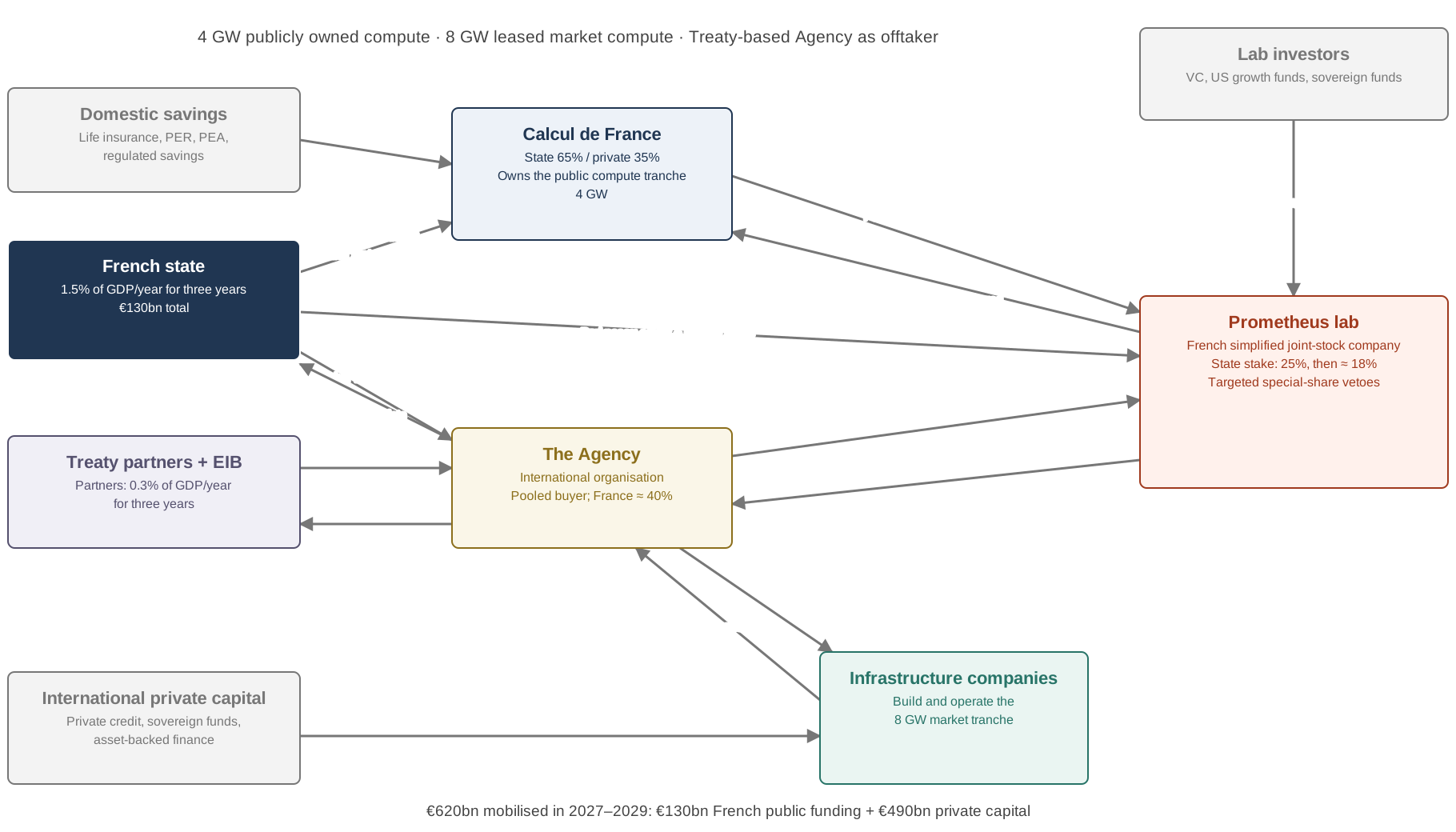
Figure 10. Prometheus Plan: organisational structure
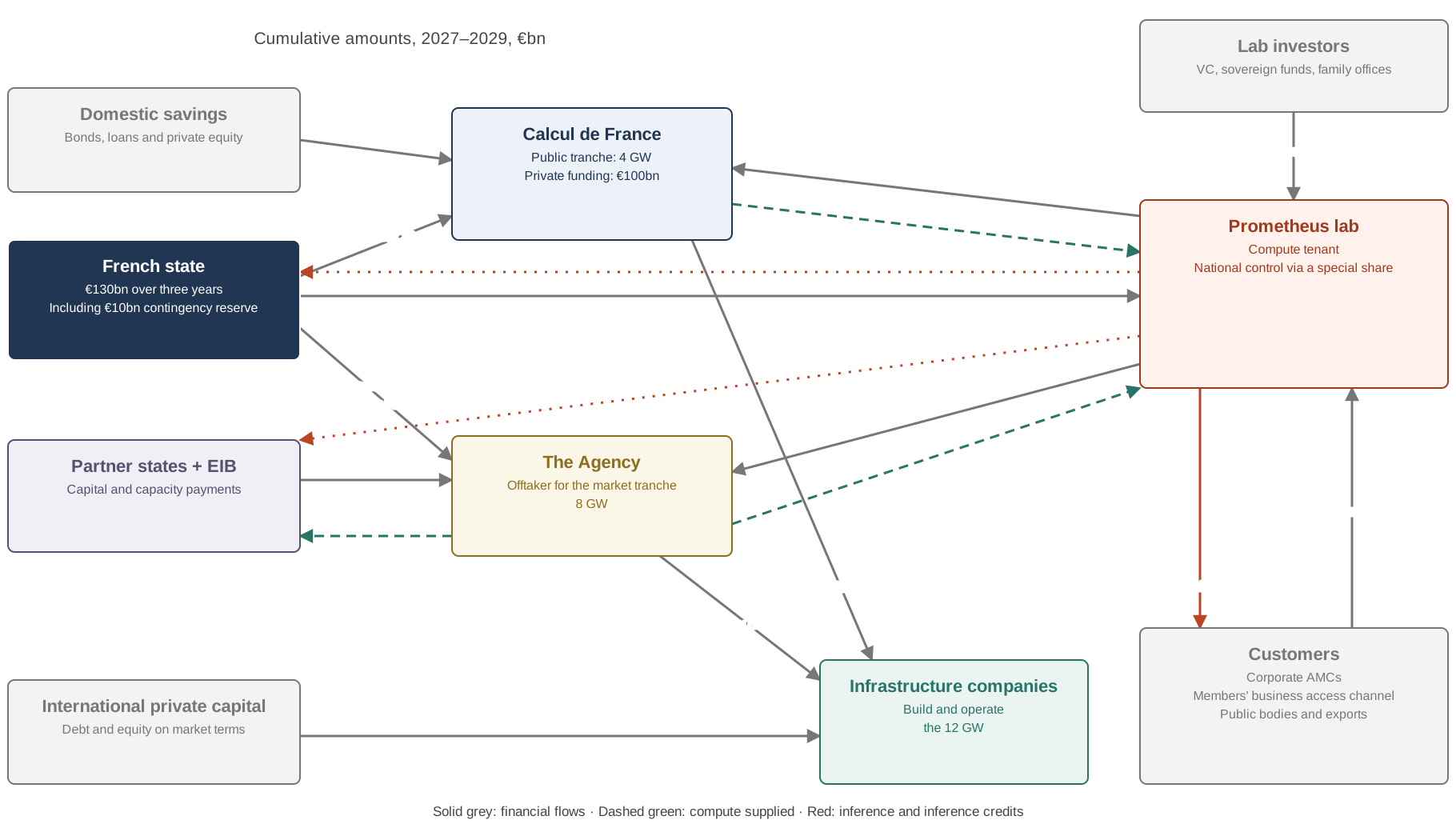
Figure 11. Prometheus Plan: financial flows
Figures 10 and 11 illustrate the overall structure and financial flows of the Prometheus Plan.
The €620 billion in section 1 is the amount to be mobilised over three years: the sprint's own cost, plus advance funding for post-sprint deliveries to partner states and reserves. Figure 12 provides the breakdown. Gross fundraising across all entities is higher, around €700 billion, because of internal flows within the structure.
| Measure | €bn | Composition, 2027–2029 |
|---|---|---|
| Economic cost of the sprint, excluding internal flows | 520 | Market tranche: 285, including CapEx for 8 GW at $38bn/GW, construction-period interest and operating costs; Calcul de France: 139 (Figure 7); lab excluding rent: 70, including salaries, tooling, data and temporary rentals; programme: 22.5, for financing reservation fees and management; Agency stabilisation reserve: 3 |
| Advance funding for post-sprint deliveries to partner states | 72 | Pre-booked rights acquired during the sprint for delivery in 2030–2034 (Figure 1), paid for in 2027–2029 but consumed later |
| Reserves and cash buffers | 28 | Programme contingency reserve: 10 (Figure 13); Calcul de France cash buffer: 19 (Figure 7); rounding |
| Financing to be mobilised in 2027–2029 | 620 | Public contribution: 130 (Figure 13); private capital: 490, including domestic savings of 120 and international capital of 370 (section 2) |
Figure 12. What makes up the €620 billion (2027–2029)
With the structure now fully explained, Figure 13 presents the overall allocation of public funding.
| Item | Three-year total | Annual profile | Budgetary treatment |
|---|---|---|---|
| Calcul de France equity (28) + LPM defence enclave appropriations (11) | €39bn | 14 / 14 / 11 | Equity: financial transaction; LPM: defence expenditure under Article 346 |
| State/BPI share in the lab: 25% after founding and Series B, floor of 18% at Series C | €23bn | 10 / 13 / 0; contribution adjusted to valuation by formula, see Figure 2 | Financial transaction, deficit-neutral |
| Agency paid-in capital: French share, target 40% of 25 | €10bn | 5 / 3 / 2 | Asset acquisition, deficit-neutral except for calls |
| French capacity payments through the Agency: target 40% of 90, hard ceiling below 50% | €36bn paid, including 2 for delivered sprint capacity and 34 pre-booked for the long-dated tranche | 7 / 13 / 16 | Only consumed capacity is current expenditure affecting the deficit; the remainder is a deficit-neutral receivable |
| Reservation fees for future financing27 | €10bn | 3/year | Current expenditure |
| Programme management and evaluation authority | €2.5bn | 0.8/year | Operating expenditure |
| Programme contingency reserve: unforeseen costs, public-tranche currency hedging, opportunities to accelerate | €10bn | As required | Unallocated commitment appropriations |
| TOTAL | €130bn, including a reserve of 10 | 40 / 47 / 33 excluding reserve | - |
Figure 13. Uses of the public contribution to Prometheus financing
The interest on additional public debt raised to finance this €130 billion—around €0.8 billion, €2.5 billion and €4.2 billion over the three sprint years, then around €5.5 billion annually—would fall under the state's debt-service budget, outside the envelope above. Like other current spending, it would affect the deficit, by around 0.17 percentage points of GDP at steady state. Once the lab reaches the frontier, however, it would be covered by Calcul de France dividends, programme-generated taxes and the discount earned on prepaid capacity. If the lab fails to reach the frontier, around €2.5 billion a year would remain uncovered, a recurring cost of less than one-tenth of a percentage point of GDP. The plan's recurring cost would thus be zero or negligible relative to the strategic benefits acquired.
The likely impact on French sovereign yields would be very small. Additional Treasury bond issuance to fund Prometheus would be around 15% above the current trajectory, but strictly time-limited, with its effect moderated by the limited deficit impact discussed below. French authorities would accompany implementation with clear communication, particularly to rating agencies, explaining the nature of the expenditure, the assets acquired and credible loss caps in failure scenarios (section 9). The financing structure itself would be largely insensitive to a wider sovereign spread: Calcul de France rents are denominated in dollars at the market compute price prevailing at signing, fixed for the capacity contract's duration, while the international Agency acts as a firewall. The rise in French yields in summer 2026—the ten-year OAT exceeded 4.2% in early September, its highest since 2008—reflects the geopolitical context and, in part, France's own fiscal trajectory. Markets will judge that overall trajectory, including the plan, rather than the plan in isolation.
Nearly two-thirds of state outlays would be neutral for the Maastricht deficit because Eurostat would treat them as financial transactions: acquisitions of assets, such as equity in the lab and Calcul de France and Agency capital, or receivables, such as payment for compute deliverable to member states after the sprint. Other spending would partly replace existing plans: French capacity delivered through the Agency during the three years would substitute for some public-administration inference spending, while LPM-funded defence compute would build on investment already launched through France's defence AI agency, AMIAD. Overall, in each of the programme's three years, the incremental reported deficit relative to the existing trajectory should be around €15 billion, or just 0.5% of GDP annually.2829 This assumes dialogue with Eurostat from T0, particularly to secure ex ante confirmation that Calcul de France's balance sheet is not consolidated with the state's30 and that the Agency is recognised as an institutional unit distinct from its members.
Of the €60 billion of public equity spending—state investment in the lab, Calcul de France equity and Agency capital—one-quarter to one-third, or €15–20 billion, could readily be financed on a budget-neutral basis through partial or full disposal of other state holdings whose current ownership levels no longer serve a strategic purpose: Engie, Orange, Renault, FDJ and Stellantis. If chosen, this reallocation of the state's asset portfolio would reduce the plan's overall public financing bill accordingly.
State aid and compliance with EU law
Proceedings brought by the Commission, or following a challenge by another economic operator before the Court of Justice of the European Union, would have damaging effects on borrowing rates. Unlawful aid must be repaid with interest, a prospect lenders find unacceptable, and could undermine the structure.
The structure therefore prioritises, in this order:
- arrangements involving no state aid, where the public sector acts like an ordinary economic operator on market terms;
- aid within the meaning of EU law that qualifies under a permitted exception;
- funding for essential state security interests within Article 346 of the Treaty on the Functioning of the European Union (TFEU), to which internal-market rules do not apply, although the Court interprets this provision restrictively.
For the lab, the state invests on the same terms as majority private investors and at a market-set price. Deferred rent owed to Calcul de France is simply provisioned supplier credit priced for risk, conventional for a company growing this rapidly. For the market tranche, the international Agency gives no unlimited guarantee and contracts at market prices with both infrastructure companies and the lab. These arrangements involve no state aid.
For the public tranche, several layers must be distinguished. The small defence compute allocation of 300 MW is separate: funded by LPM appropriations and covered by Article 346, it cannot be classified as state aid. No part of the public tranche is financed by state-guaranteed debt. The instruments used—equity invested pari passu with private investors, Fonds d'épargne loans at the reference rate, market debt and third-country export-credit-agency cover—therefore contain no aid. The standby guarantee authorised by the Finance Act would be designed in accordance with the Commission's Guarantee Notice: partial coverage, a market premium and a financially sound borrower. It would thus not constitute aid and could be activated without prior approval, though it would still be pre-notified as a precaution. The IPCEI route, requiring joint notification by EU partners, would be reserved for measures that might need it—for example, if rent deferral were classified as aid despite being priced for risk.
The public compute tranche is therefore financed through debt without a state guarantee, on market terms and without state aid. Any protection offered to savers, such as a retail capital floor, would attach to the savings vehicle, never to Calcul de France. Savings would be lent to Calcul de France on market terms, conferring no advantage on the borrowing operator.
The business access channel, through which the Agency allocates raw compute to member-country businesses in proportion to members' shares, raises a more complex EU-law question, but rests on solid conceptual foundations and established precedents. First, it confers no price advantage: raw compute is allocated at market prices through an objective procedure open to every business conducting economic activity in the member's territory. Second, access is not a tied sale: it is raw compute that may be used freely. It represents a fair return in capacity for participation in a treaty organising joint activities, following models used for over fifty years without being struck down by the Court: ESA's industrial return to member-state businesses in proportion to programme funding, and the ITU's allocation of geostationary orbital positions.31 Finally, it is by design outside public procurement covered by Directive 2014/24, whose Article 9 excludes international organisations operating under their own procurement rules.
The state's special share in the lab must also be justified under EU law so that it is not treated as an unlawful restriction on capital movements. In line with the Court's case law, a genuine national-security justification—continuity of access, sensitive and dual-use capabilities, and the location of critical assets—combined with proportionality, through narrowly defined vetoes over specified strategic transactions rather than a general oversight right, would justify this feature.
The post-sprint trajectory
If the lab produces frontier or near-frontier models by the end of the sprint, it must be able to keep pace thereafter without public financial support.
8.1 Prometheus's sustainability thresholds
Compute capacity must continue to expand in 2030 and beyond. To calculate the lab's post-sprint self-sufficiency thresholds, we therefore assume 18 GW of IT capacity in 2030, as discussed below in the post-2029 compute trajectory. The sustainability calculation uses the following assumptions.
CapEx. $38 billion/GW: 65% IT equipment depreciated over five years and 35% building shells and electrical infrastructure depreciated over thirty years. This amounts to $684 billion for 18 GW.
OpEx. Around $0.6 billion/GW/year for electricity, based on $83.4/MWh, a PUE of 1.14 and 71% utilisation. In France, at an all-in €70/MWh, the electricity bill falls to around €0.5 billion/GW/year. Holding other operating costs in Epoch's model unchanged, total OpEx is around €0.76 billion/GW/year, or $0.84 billion/GW/year: $15.0 billion for 18 GW.
Payroll. Around $10 billion a year.
Financial structure. Based on Figures 6 and 7 and market-tranche CapEx, sprint-built capacity requires around €275 billion of debt: €190 billion for infrastructure companies at 7.4% and €85 billion for Calcul de France at 5.1%, a weighted rate of about 6.7%. It also requires around €140 billion of equity: €95 billion of private market-tranche equity requiring a 13% IRR, plus €15 billion of private and €28 billion of public Calcul de France equity at 9%. At $1.15/€, that implies around $21 billion in interest and $19 billion in expected equity returns, including $3 billion for the public shareholder. The 2030 expansion, another 6 GW and $228 billion of CapEx, is financed through project finance under full Agency offtake32 via its limited-recourse compartment: around $150 billion of debt at an average 7.9%, with the compartment premium adding 75–150 basis points over the sprint financing stack, and around $78 billion of private equity requiring a 15% IRR. This means around $12 billion in interest and $12 billion in expected equity returns. This is deliberately conservative: it assumes no operating cash flow contributes to financing the expansions.
Production capacity. The model uses output tokens per second per MW of IT capacity, avoiding dependence on the power requirements of future individual GPUs. For a 128k/1k input/output token profile on a Kimi K2.6-type model, Epoch currently estimates throughput of around 75,000 tokens/second/MW IT, incorporating assumptions on numerical precision, speculative decoding, batching and a minimum user speed of 35 tokens/second. The central scenario assumes a net threefold gain by 2030 from combined hardware and software improvements—new accelerators, quantisation, prefill and decoding optimisation—reaching 225,000 tokens/second/MW IT at full load.
Saleable volume. Commercial inference uses 60% of the fleet, or 10.8–12 GW, with the remaining 7.2–8 GW allocated to R&D, final training runs, post-training, synthetic data generation and internal use. At 70% commercial utilisation, average sold throughput is 157,500 tokens/second/MW, yielding annual production of 53.6–59.6 billion Mtok, where one Mtok is one million tokens.
Cost floor. $1.2/Mtok, including $1.0 of GPU depreciation, $0.11 of electricity at €70/MWh and $0.06 of other operating costs.
These credible assumptions produce the three thresholds in Figure 14.
| Threshold | Includes | Revenue at 18 GW ($bn/year) | Required average price ($/Mtok) |
|---|---|---|---|
| S1: cash survival | OpEx + payroll + interest | 58 (15 + 10 + 33) | 1.0 |
| S2: sustained frontier capability | S1 + GPU replacement + shell depreciation | 155 (+89 +8) | 2.8 |
| S3: full economic self-sufficiency | S2 + returns on private (28) and public (3) equity | 186 | 3.3 |
Figure 14. The lab's financial self-sufficiency thresholds (2030, 18 GW)
Note: Prometheus is treated as a single system. Internal payments, such as compute rents paid by the lab to the Agency and Calcul de France, cancel out and are therefore not shown.
S1 is the immediate financial survival threshold. It covers fleet operations, staff and interest without new external funding, corresponding to around $3.2 billion in annual revenue per installed GW. This seems achievable from 2030 if Prometheus has reached the frontier and can combine sovereign public demand, regulated sectors, large European businesses and some international demand. For comparison, OpenAI reported more than $20 billion of annualised revenue for around 1.9 GW of compute in 2025, exceeding $10 billion/GW. Prometheus would therefore need less than one-third of the leaders' commercial performance observed in late 2025, and probably substantially less relative to their current performance as frontier revenue per GW rises. S1 would still leave one crucial element unfunded: GPU replacement, around $90 billion annually at steady state for an 18 GW fleet.33
The project's true steady-state break-even threshold is therefore S2. Revenue then covers not only OpEx, payroll and interest, but also replacement with next-generation GPUs, preventing technical decline relative to other frontier labs. At $8.6 billion of annual revenue per installed GW, it is broadly comparable to the leading labs' commercial intensity in late 2025: $10–20 billion of revenue on 1.4–1.9 GW amid compute scarcity. The financing structure for the 2030–2031 tranches described below barely changes these first two thresholds. Project finance substitutes equity for corporate debt, leaving cash requirements almost unchanged; the higher cost of capital appears in S3, which includes equity returns.
The average price required at S2, around $2.8 per million output tokens, remains far below current frontier-model prices. This comparison is indicative, since commercial offers also charge for input tokens and apply volume, caching and batch-processing discounts. It nevertheless shows that sustainability in this scenario depends primarily on higher inference throughput per MW and high fleet utilisation, rather than maintaining high unit prices.
Reaching S2 in 2030 is not necessary for the plan to succeed; 2032–2033 is probably more realistic. Reaching the frontier changes the financing problem by sharply increasing the lab's borrowing capacity, making it one of the world's strongest corporate credits. Whereas the sprint requires strict avoidance of financial debt, financing replacement CapEx through borrowing after 2029 would follow the path already taken by all the leaders. The strategic threshold for lasting frontier capability therefore becomes financially much less constraining once the frontier is reached. Neither OpenAI nor Anthropic has yet reached its equivalent of S2, although both are now approaching it.
S3 represents full economic self-sufficiency. It adds the required equity returns to S2: 13% on private equity in the sprint's market tranche, 15% on equity in the 2030-tranche compartment, and 9% on Calcul de France equity, both private and public. Reaching it would demonstrate that Prometheus can both renew its productive assets and fully remunerate capital on the terms originally envisaged. It is not, however, necessary for the public plan's strategic success.
After the sprint, Calcul de France would live on rental income like an infrastructure property company, with no further state equity injections. GPU replacement in the public tranche would be funded by Prometheus rent payments through provisions made by Calcul de France throughout the chips' lives, as US datacentre operators do. Even subsequent expansion of the public tranche would be financed by private domestic savings on the same terms as the first tranches, but without new state equity, as was the construction of EDF's original nuclear fleet.
8.2 The continuing compute race and its implications
It is very unlikely that scaling laws will reach their limits in 2030. The compute race will continue among the major frontier labs, now including Prometheus. To stay at the frontier after the sprint, compute available to Prometheus must reach 18 GW in 2030, 24 GW in 2031 and at least 30 GW in 2032.
With its initial public support behind it, the lab would have the means to continue without public financial assistance. With revenue close to S2, its profitability would enable it to raise funds for new compute on its own credit. On reaching the frontier milestone during 2029, it would then be able to make firm commitments for the additional 6-plus GW to be delivered in 2032.
There is, however, a difficult financing and delivery gap for the 12 GW—6+6—that must be delivered in 2030 and 2031 to keep Prometheus at the frontier. Building capacity on this scale takes roughly three years from the first reservations of critical long-lead-time supplies to final grid connection. Phase 2 cannot therefore wait for the frontier milestone.
Preparation for moving from 12 GW in 2029 to 18 GW in 2030 and 24 GW in 2031 is built into the plan's design. It must begin in 2027 and be clearly communicated to treaty partners. These additional 12 GW would be built through the same channels as the sprint capacity: Agency offtake, near-total for the 2030 tranche and partial for 2031,34 enabling private financing through infrastructure companies, potentially supplemented by another 1–2 GW through Calcul de France. There would be no additional public financing from France or its partners. Expansion of the market tranche without new public money or increased callable capital is possible because a dedicated Agency compartment would give these new tranches priority in serving post-2029 prepaid demand—long-dated partner slots and AMCs—if successful, while a risk premium for the new commitments would moderately increase the relevant cost of capital.35 With no new public funding, the additional 12 GW create no additional partner slots. The members' business access channel remains, but, if the frontier is reached, solely as Prometheus inference rights, ensuring that all new compute capacity is available to the lab. If the lab fails, the 6 GW of the 2030 tranche and the 2–3 GW of the 2031 tranche that cannot be cancelled without major sunk costs would join the compute pool available to treaty partners. With strong demand, they would readily find tenants and further strengthen partners' bargaining power. At the same capped risk level—contribution plus callable capital, 1.2% of GDP—the expansion therefore increases partner benefits in both success and failure scenarios. This is all the more true because a substantial share of the additional 12 GW would be built in partner countries.
Like the sprint capacity, these tranches must be protected against a possible surge in market compute prices between 2027 and 2031. During that period the lab would still be a frontier contender, lacking both the revenue to pay rents set by the leaders and the funds to build its own compute directly. Protection requires fixing future rents as early as possible. Options would be signed with infrastructure companies and critical suppliers early in the sprint: T0–T+6 for the 2030 and 2031 tranches, and T+6–T+12 for 2032. Exercise prices would follow an indexed cost formula—chip and site CapEx, energy and cost of capital—rather than prevailing rental prices, in exchange for a genuine option premium.36 Beyond 2032, the established frontier lab would contract or build on its own at market prices, as the leaders do.
Figure 15 summarises the commitment schedule for post-sprint compute tranches that must be launched during the sprint.
| Milestone | 2030 tranche: +6 GW → 18 | 2031 tranche: +6 GW → 24 | 2032 tranche: +6 GW → 30 |
|---|---|---|---|
| First options signed: long-lead supplies, Nvidia production slots, etc., with cost-formula exercise prices | T0–T+6 | T0–T+6 | 2027, T+6–T+12 |
| Firm commitment date | Mid-2027–early 2028, T+6–T+12 | 2028–mid-2029 | Late 2029 |
| Evidence available at firm commitment | Founding funding secured, first training runs | Series C, revenue ramp-up, near-frontier runs | Frontier certified at T+36 |
| Trigger making the commitment binding | Series B ≥ €35bn + T+12 milestones | T+24 milestone / Series C closing ≥ €60bn | T+36 milestone itself |
| Offtake | Agency 90% + lab 10%, options agreed at T0, backed by prepaid demand: protected partner slots and AMCs | Agency 50–70%, declining, + Prometheus direct 50–30%, conditional on reaching the frontier | Prometheus lab, through financial debt |
| Position at the T+36 verdict | Almost complete | Mid-construction | Not yet committed |
Figure 15. Commitment schedule for the 2030, 2031 and 2032 compute tranches
Beyond this transition, available electricity generation will become the decisive issue for continued compute expansion. Beyond the sprint's 12 GW, including 9 GW built in France, French capacity connectable under current conditions would probably be exhausted. From 2027, expansion must therefore be prepared on two fronts: i) increasing French electricity generation over the medium and long term; and ii) planning future GW in treaty partner countries with sites, grid capacity and generation that can be brought into service quickly, particularly for tranches from 2030 onward.
For domestic generation, meeting immediate needs through 2035 first requires a substantial increase in the capacity factor of the existing nuclear fleet to release more electricity output.37 In parallel, a major acceleration of new nuclear construction, beginning in 2027, would prepare for another wave of Prometheus datacentres in France in 2035–2045.
For Prometheus compute hosted by treaty partners, particularly after the sprint, site selection must be discussed from 2027 and settled as early as possible. Objective criteria on actual site-level electricity availability and the cost per kWh at the required date would be incorporated into the treaty. A clear investment trajectory, firm for 2030 and around half of 2031, would further attract partners likely to have substantial electricity capacity early in the next decade—notably Canada, Spain, the Nordic countries and the UAE—through major investment on their territory.
Exit milestones and public-finance exposure if the project fails
Although success at the frontier is credible and, we believe, likely if execution matches the project's ambition, such an effort requires a precise exit framework established at launch to limit the cost of failure to public finances. The Prometheus Act should include review milestones with objective criteria for continuation or termination.
To make the assessment as objective and authoritative as possible in a highly technical field, the Act would entrust decisions on whether model-capability milestones have been met to an independent panel of world-class European AI researchers, using a public methodology defined in advance. This independent, neutral panel would be indispensable in determining whether frontier or near-frontier capability has been reached, since that finding triggers major contractual consequences for international partners, notably conversion of pre-booked compute slots into Prometheus inference credits.
The project follows contractual milestones at T+6, closing the founding round; T+12, a first credible model and Series B; T+24, a frontier contender and Series C; T+30, a frontier or near-frontier model; and T+36, frontier certification by the panel, triggering conversion of partner rights and firm commitment to the 2032 tranche. All condition fundraising or the firming-up of compute tranches. Two, T+12 and T+30, are the main exit points. The actual exit decision would nevertheless rest with the French government, in consultation with partners and supported by the panel's technical assessment.
At T+12, failure would mean either an inability to complete Series B at the required level with the expected investors—notably US growth/crossover funds and large sovereign-fund commitments—or failure to produce a promising first model. At T+30, failure would mean an inability to produce a frontier or near-frontier model despite the compute made available.
Failure at a milestone would immediately trigger a pre-agreed procedure pivoting Prometheus compute towards sovereign public use or commercial leasing. Further public subsidies to keep the lab alive—the trap that risks unlimited state losses—would be ruled out entirely.
Since global compute demand is almost certain to be very strong in 2029–2030, regardless of the lab's success, public compute and France's 40% access rights to market compute would retain considerable value. The state's total net loss would be limited to equity invested in the lab and certain unrecoverable costs, around 1% of GDP overall. Despite that net economic loss, France would be far better placed than under the current trajectory: it would have 9 GW of compute on its soil, including 4 GW in full public ownership, providing real bargaining power in negotiating access to American or Chinese models.
The only theoretically possible heavy-loss scenario—still capped at 2–4% of GDP—would be a collapse in global compute demand during a new worldwide AI winter. This appears very unlikely: AI's transformative potential, even without further progress, has no prospect of disappearing within a few years. Even in this severe scenario, maximum state exposure would remain around €160 billion, only €30 billion more than cash paid out during the sprint.38
Conclusion
This detailed examination of the Prometheus Plan's financing establishes three points.
- The plan can credibly be financed, in both its dimensions:
- public financing, requiring a substantial state effort, but strictly time-limited, modest in deficit impact and with limited potential losses;
- private financing, consistent both with the sums currently invested by financial actors in compute and labs, and with their expectations, through a structure that matches their usual practices.
- If the plan succeeds, keeping the lab at the frontier without further public financial support after the three-year sprint is financially realistic.
- The plan's expected payoff is strongly positive for the state, the French economy as a whole and participating international partners. Success would give France and Europe an invaluable strategic and economic asset for the decades ahead. Even failure to reach the frontier would leave France and its partners in 2030 with substantial compute under their control, a much stronger position than the current trajectory for pursuing alternatives such as open source or negotiated dependence on the United States.
The main question that remains is: what are we waiting for?
Notes
- The lab's capital raises are used in part to pay rent for gigawatts of compute whose construction is financed by market debt. ↩
- A take-or-pay contract commits the tenant to paying the datacentre operator the agreed price for capacity over a specified period, whether or not it needs that capacity. ↩
- The state would not receive founder terms: a share of initial founder equity at a nominal price before dilution through funding rounds. There are several reasons. State participation would first make fundraising considerably easier. To attract the elite researchers and private investors needed for success, it is also important to avoid the impression of a state lab whose governance gives public authorities excessive rights. Finally, only investment on the same terms as ordinary investors avoids classification as state aid under EU law, a crucial issue for success (section 7). ↩
- For reference, OpenAI is currently valued at $852 billion and Anthropic at $965 billion, both as of May 2026. Both are preparing IPOs, probably in late 2026. ↩
- At Anthropic, a trust with no equity elects a majority of the board, while shareholders Amazon and Google have no board seats. At Meta, Mark Zuckerberg holds 58% of voting rights with only 13% of shares. At Palantir, the founder retains lifetime control regardless of dilution. ↩
- The investment vehicle's governance, whether an ELTIF or a listed company, would include an independent board, a director on Calcul de France's board and an autonomous voting policy, so that Eurostat treats it as a shareholder in its own right rather than simply a fundraising conduit. ↩
- To avoid classification as state aid. The prudent-investor test is assessed at the time of the decision, and a private infrastructure lessor would sign precisely this kind of long-term, fixed-price lease rather than a floating-rent contract. ↩
- The market-tranche structure has neither the balance sheet needed to support such deferral nor a shareholder paid to bear the associated risk. Calcul de France can do so because its funding structure is designed for it and it benefits from a lower cost of capital for public compute construction. An identified tranche of debt without a state guarantee, placed with investors who price this risk, would also provide market evidence that a prudent creditor would have extended the credit. ↩
- The contribution is set low enough to be an acceptable price for partners to share, as insurance, in the benefits of a programme remaining under French control, but high enough to make a coalition diplomatically achievable. Partner funding of €24 billion a year for three years is needed (section 5), with many different coalitions possible. ↩
- By contrast, in 2011 Eurostat refused to remove the EFSF from its guarantors' public debt, because states approved each operation outside the facility's own governing bodies. ↩
- €110 billion corresponds to the minimum funding thresholds for each milestone, below which the exit pivot is triggered. €135 billion corresponds to meeting targets in all three rounds. ↩
- Accepting modest state dilution at Series C, when tickets are most expensive but public equity support should be less necessary because the lab has begun to prove itself, maximises the effect of public funds while limiting the loss of public financial upside if the plan succeeds. ↩
- If the lab cannot raise as much as hoped, it would release market-tranche compute for commercial leasing. Below the minimum amount for a funding round, the corresponding exit milestone would be activated. ↩
- Never as an entitlement: automatic public purchases of unsold securities would amount to an implicit guarantee and be evidence of control for Eurostat. ↩
- Subordinated debt is repaid after other creditors, creating greater risk and therefore a higher interest premium. ↩
- Between 55% and 65% of AI datacentre CapEx is invoiced in dollars—GPUs, servers and networking equipment—with the balance in euros for civil works, grid connection, cooling and land. ↩
- This return is supported by the Agency's creditworthiness and therefore its rating: automatic, unconditional capital calls written into the treaty, ratification by national parliaments before the first capacity contract, and a reserve funded in advance. ↩
- OpenAI's Stargate campus at Abilene is financed by $9.6 billion of bank debt and $5 billion of equity, implying an all-in cost of capital of around 9.5–10.5%. In mid-2026, a $2.6 billion loan financing Anthropic capacity was placed at a yield above 10%. Prometheus's cost of capital is thus comparable to Stargate campuses and slightly below the marginal cost of capacity actually purchased by OpenAI and Anthropic. ↩
- Early-September 2026 TEC 10 index, with the reference fixed at that date. ↩
- Charging public equity and the budget-funded enclave the ten-year OAT rate of 4.2% in early September 2026 gives an all-in public-tranche cost of capital of around 5.3%, against around 9% for the market tranche: a gap of more than four percentage points, or roughly €1.3 billion in annual savings per public GW. This convention measures the state's financing cost, not the economic cost of the risk it bears. ↩
- A substitution clause included from inception would allow the extension to be contracted directly by a self-sufficient Prometheus lab rather than by the Agency, which would no longer be needed for this purpose. ↩
- See section 7 below. ↩
- The datacentres supporting these rights are part of Prometheus's market compute tranche and are designed for secure deployment of its model weights. If Prometheus reaches the frontier, its frontier models would therefore be the only ones available on the raw compute subscribed by businesses, strongly encouraging, but not requiring, demand to flow towards the lab. ↩
- Frontier labs can deploy model weights in datacentres for inference only if they have sufficient control over those facilities to ensure secure deployment and preserve the confidentiality of their architecture. ↩
- Three illustrative coalitions, among others, exceed this threshold: a compact European coalition centred on Germany—Germany, Italy, Spain, the Netherlands and Belgium, around €10 trillion in combined GDP; a European coalition without Germany—Italy, Spain, the Netherlands, Belgium, Sweden, Poland, Austria, Denmark, Portugal and Ireland, around €9 trillion, with EIB participation reducing the requirement to around €5.8 trillion; and a Euro-Pacific coalition—Canada, Japan, South Korea, Spain, the Netherlands and the Nordic countries, around €11 trillion. ↩
- For the scenario without the EIB, add the EIB column in Figure 8 to the partners' share. ↩
- Annual payments of 0.3–1% of reserved amounts to banks and funds to keep financing available ahead of need for later stages: loans for future datacentre tranches, underwritten issuance and bridge credit between milestones. Without these fees, each conditional milestone would become a refinancing hurdle that lenders would price in upfront. The fees buy certainty that funding for the next stage is already available once the milestone is passed. ↩
- Annual breakdown in €bn: firm recurring spending of 8.5, comprising the defence enclave (3.7), financing reservation fees (3.3), programme management (0.8) and capacity consumed during the sprint (0.7). Depending on the year and decisions taken, add any use of the programme reserve, up to 3.3, and additional interest charges of 0.8–4.2; subtract substitution for existing expenditure of 1–2. The €15 billion figure prudently takes the upper end of this range. ↩
- The deficit neutrality of €34 billion of pre-booked capacity is only a deferral. Expenditure would be recognised on delivery in 2030–2034, but only for the portion consumed by the state itself. Assuming a realistic €2–3 billion of annual state consumption, the resulting deficit would be less than 0.1% of GDP annually; capacity resold at market prices would remain neutral. ↩
- Any consolidation of Calcul de France would be temporary—it would be deconsolidated in 2031–2033 after its CapEx had been absorbed and market-producer status established over three financial years—and financially neutral. It would, however, be politically costly in terms of the reported Maastricht deficit, adding around one percentage point of GDP annually during the sprint. ↩
- Domestic allocation of such a scarce resource—an orbital position worth hundreds of millions of euros—to national operators has never been treated as state aid or nationality-based discrimination. The Commission has never challenged EU member states' allocation of these slots to incumbent operators. The international organisation's legal framework intervenes, and national allocation is understood as management of a state endowment rather than a market advantage. The same would apply here. ↩
- See section 8.2 below. ↩
- This is an annual provisioning amount based on the stock of GPUs in service, not an immediate cash outlay. Cash replacements in 2031–2034 concern only the sprint fleet; the 2031 expansion reaches replacement age only from 2036. A lab remaining at the frontier must nevertheless provision annually across its entire fleet. ↩
- Unlike the 2030 tranche, 90% subscribed by the Agency with the lab covering the balance, only 50–70% of the year-five tranche is firmly covered. The lab's balance has two layers: a direct purchase contract that becomes firm only when the independent expert certifies the frontier technical event, and an uncontracted merchant portion supported by equity remunerated accordingly. Separation is physical as well as contractual: each layer corresponds to distinct, separately financed datacentre halls. Senior debt is sized only against firm Agency-layer revenue, and additional halls can be delayed or abandoned without undermining financing for the remainder. ↩
- Segregating the two Agency compartments, with seniority clauses protecting claims related to the first 12 GW, would prevent spillovers into the sprint's cost of capital. The premium would be concentrated on year-four and year-five tranches but should remain manageable: 75–150 basis points, implying a cost of capital around 10% for the 2031–2032 expansions and raising the lab's rental price for them by only 6–8%. ↩
- The insurance would cost modest reservation deposits of around 1–2% of each vintage's CapEx, credited against payments if the option is exercised. ↩
- Raising the French nuclear fleet's capacity factor to 90%, the US fleet's level, would allow another 16 GW of compute to be connected. Although achieving that target would be very difficult, improvements are possible, especially since flexible electricity demand from training runs could substantially reduce output modulation, a major drag on the capacity factor. Even 80% would allow another 9 GW of compute in France in 2031–2033, a decisive contribution to continued post-frontier expansion. ↩
- The only additions would be France's €16 billion of callable Agency capital and the €15 billion standby guarantee ceiling, if that guarantee had been activated. ↩